
90% of people who use AI to research products don't buy through it. They buy through your website instead.

Everyone is talking about agentic commerce right now. AI shopping agents. ChatGPT checkout. The death of Google. The end of the website as we know it.
Here's what the data actually says: 90% of people who use AI to research products don't buy through it.
According to a 2025 consumer research study by affiliate marketing platform Levanta, less than 10% of US online shoppers who use AI tools for product research report clicking AI-recommended links.
The other 90%? They go looking for human validation — YouTube reviews, Reddit threads, blog posts, social media, creator content — and then they complete the purchase somewhere they trust.
That somewhere is still your website.
So before you spiral about whether your brand is "AI-ready," let's talk about what actually drives purchase decisions in 2025 and 2026 — and why the foundation you've already been building matters more than ever.
When ChatGPT tried to take over commerce…
In 2025, the big news was that Chat GPT introduced a Buy button. Glossier, SKIMS, Spanx, and Vuori were among the early Shopify brands discoverable inside ChatGPT conversations.
The problem was that most shoppers still didn’t want to buy through Chat, and I can understand why. Do you want to give a chat window your credit card, or would you feel safer buying on secure website with trust badges?
Not only that, but what about all the other products you might be missing out on? How do you trust ChatGPT online instead of your senses?
Shopify saw the signs and walked back the "instant checkout inside ChatGPT" piece. In their updated approach, buyers discover products in ChatGPT, but complete their purchase on the merchant's own online store, either through an in-app browser or a new tab.
Shopify's own Help Center now describes the ChatGPT integration as "a product discovery channel," and states that customers "are redirected to buy products in your online store checkout."
Merchants, in Shopify's own words, "keep their store at the center."
The image below is from Levant's Affiliate Marketing report, showing the website's continuing strategic place in shopper's buying decisions.
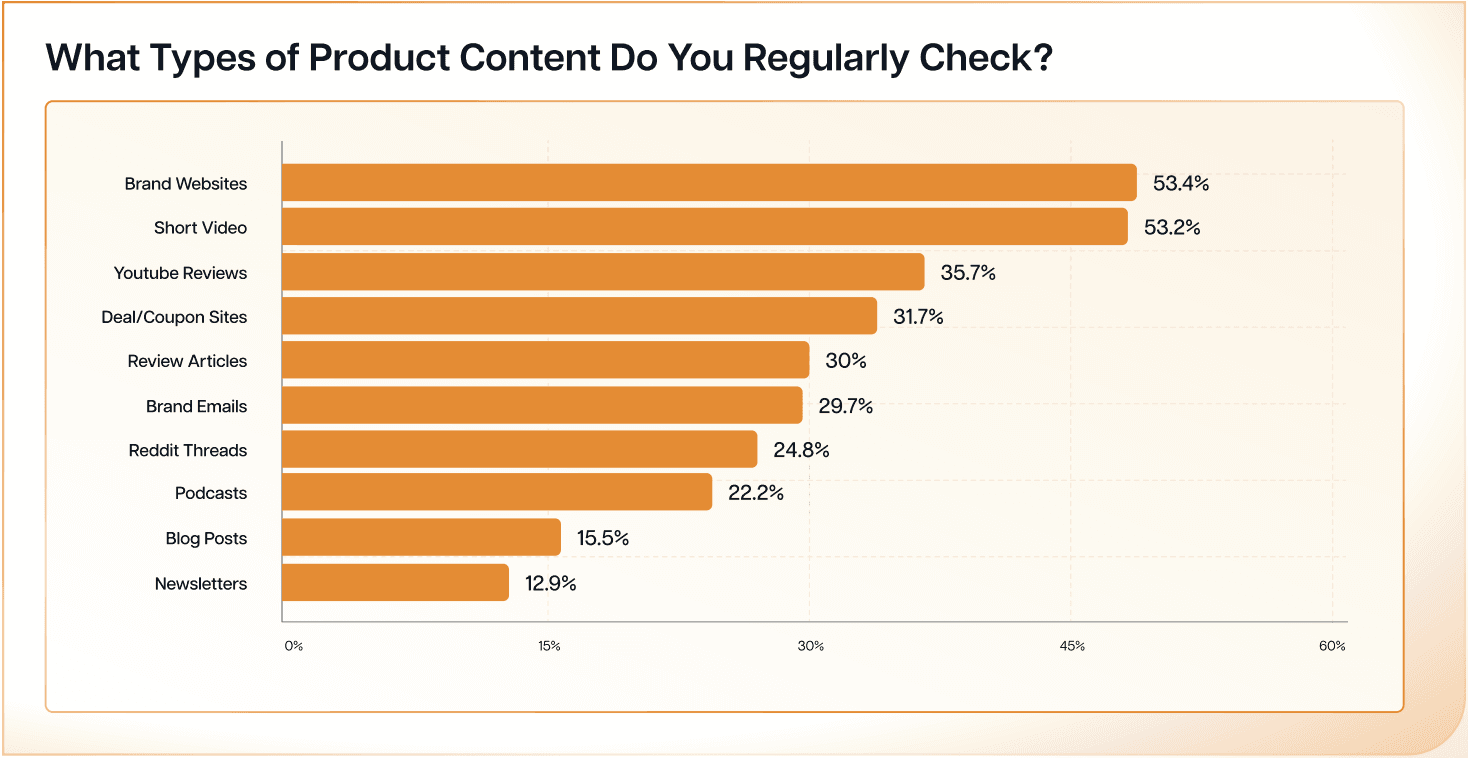
This change reflects something real about where consumer trust actually lives. People are increasingly comfortable letting AI help them find something. They are much less comfortable letting AI finalize a transaction on their behalf, especially for a brand they haven't encountered before.
Brands who build trust always win
The brands early in the ChatGPT integration — Glossier, SKIMS, Vuori — aren't winning because they signed up for a new tech feature. They're winning because they built the kind of brand that AI has plenty of material to work with.
Think about what it takes for ChatGPT to confidently recommend a product. It needs:
Clear, accurate product data: descriptions, pricing, specs, availability
Third-party credibility: creator reviews, editorial coverage, customer testimonials
Consistent brand voice across channels: so the AI can synthesize a coherent picture
Social proof: reviews, ratings, user-generated content
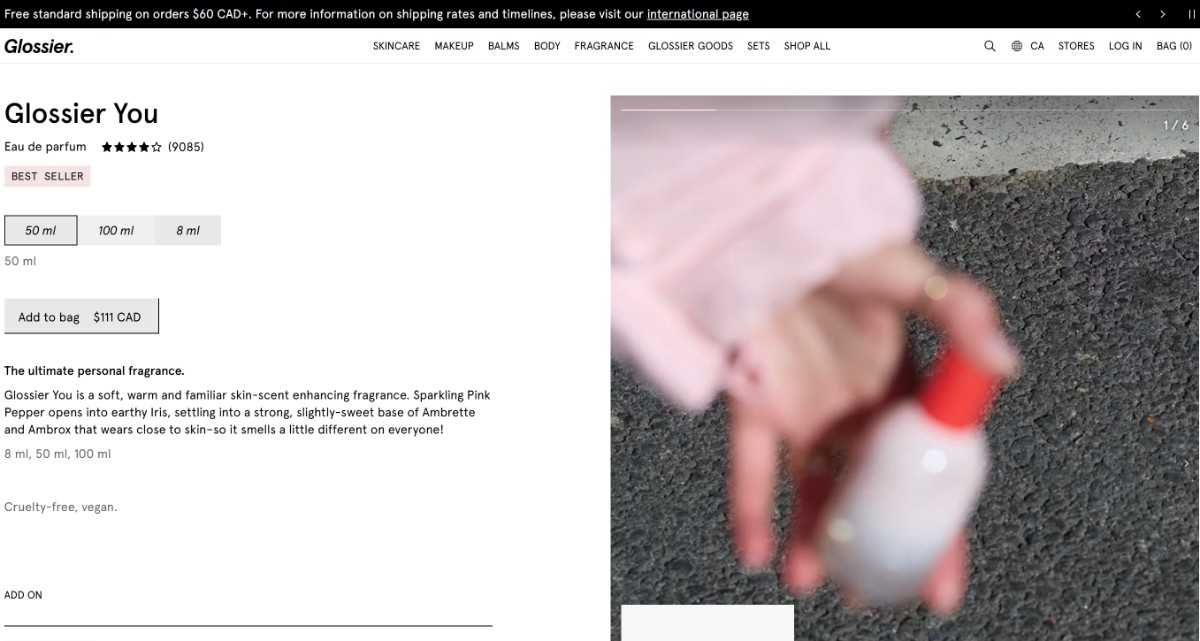
Glossier has been building their brand ecosystem for over a decade. Their product pages are clean and well-structured. Their creator and affiliate programs generate a constant stream of fresh, credible content. Their community produces UGC across every platform. When an AI model scrapes the internet to understand what Glossier Balm Dotcom is and whether it's worth buying, it finds thousands of signals all pointing the same direction.
That's a brand strategy already winning. AI just amplifies this strategy using product discovery as another layer. Kind of like Google’s been doing, but in chatbots, you’ll see much fewer choices than via web search. In other words, you’ll only see the top brands doing it well.
How top brands end up in AI search results
Here's the thing about generative AI and how it surfaces brands: it's not so different from what good SEO and content marketing have always done. The terminology has shifted — people are calling it GEO (Generative Engine Optimization) now — but the inputs are the same.
AI engines like ChatGPT, Perplexity, and Google AI Mode read the internet differently than a traditional search crawler. They're not just looking for keyword matches. They're reading context, narrative, and human voice. They prioritize content that is:
Accurate and up-to-date: outdated pricing or stale product info works against you
Well-structured: clean schema markup, organized product data, clear descriptions
Credible: backed by third-party sources, not just self-reported claims
Specific: detailed enough that an AI can understand exactly what a product does and for whom
The brands showing up in AI recommendations are the ones who already had strong websites, active social channels, a healthy review ecosystem, and creator content that stays fresh. In a sense, AI is acting more like a human filter — just a billion times faster.
Think about it: what do you do after you find a brand on social? Check out their feed to see if they’re legit? Go to their website? Read product reviews? Similarly, AI is seeing the whole brand story instead of just the text.
Your feed is now a trust signal in the AI purchase journey. So is your website copy. So are your reviews. So is every YouTube video a creator has made about your product.
The Part That Should Make You Feel Good
AI isn't replacing your existing channels. It's sending higher-intent shoppers into them.
But, AI can only send shoppers to brands it can find, understand, and trust. If your product descriptions are thin, your reviews are sparse, your social presence is inconsistent, and your website hasn't been updated since 2022, you're invisible to this system. Not because AI is replacing you, but because AI has nothing to work with.
This is why creator and affiliate strategies are suddenly getting a second look from brands that dismissed them as influencer stuff. It's not just about the direct conversion anymore. Every piece of credible, third-party content about your brand is infrastructure for your AI visibility.
The Edit
AI is changing how people find products. It is not — at least not yet — changing where they actually buy them or what makes them trust a brand enough to do so.
The path to purchase has always been multi-layered. AI just added a new entry point to the top of that funnel.
The brands winning in this new landscape built strong websites. They invested in creator relationships. They kept their product data clean. They showed up consistently on social. They collected reviews. They made it easy for humans (and now AI) to understand exactly what they sell and why it's worth buying.
So if you're looking at the ChatGPT shopping integration and thinking you need to overhaul everything, take a breath. The more useful question is: if someone discovered you through AI right now, what would they find?
Start there.

Get New Inspo Weekly
Join our Substack for weekly design and marketing inspiration, and behind the scenes peeks.